Chaos Has a Cost: How Operational Inefficiency Destroys Profit Margins
Your business can be growing, your team can be working harder than ever, and your profitability can still be moving in the wrong direction. That’s because operational chaos has a cost, even when that cost isn’t immediately obvious on a financial statement.
Operational inefficiency often hides in the everyday activities of running a business: decisions that take too long, meetings that revisit the same issues, work that needs to be redone, unclear ownership, inconsistent processes, and leaders spending valuable time solving problems that should have been prevented. Individually, these issues might seem insignificant. Across an entire organization, they compound into higher operating costs, shrinking profit margins, and a business that requires increasingly more effort to produce the same results.
Often, the owner becomes the person holding it all together — resolving issues, making decisions, and keeping work moving when the organization should be capable of doing those things without constant intervention.
When looking to improve profitability, the answer isn’t always generating more revenue or cutting expenses. Sometimes, the greatest opportunity is improving how the business operates.
At Get TPA Fit, we help owners and leadership teams build the clarity, accountability, and discipline needed to improve performance and reduce owner dependency. In this article, we explore where operational inefficiencies hurt profit margins and how stronger Business Fitness helps companies operate more effectively.
What Is Operational Efficiency?
Operational efficiency is a company’s ability to use its people, time, processes, and resources effectively to produce results without unnecessary waste. In practical terms, it means getting more value from the resources your business already has.
Consider two companies generating the same amount of revenue. One constantly struggles with missed deadlines, unclear responsibilities, repeated mistakes, and leadership bottlenecks. The other has clear priorities, defined accountability, consistent processes, and leaders empowered to make decisions. Their revenue may be identical, but their profitability can look very different because one company requires significantly more time, labor, and leadership attention to produce the same result.
Revenue tells you how much business you’re generating. Profitability tells you how much value you’re keeping. Operational efficiency has a direct impact on the difference between the two.
Where Operational Inefficiency Hurts Profit Margins
When owners think about reducing operating costs, they often look at obvious expenses like payroll, equipment, software, and overhead. But some of the biggest opportunities to improve profit margins are hidden inside everyday operations.
1. Unclear Ownership Creates Expensive Delays
When employees aren’t clear about who owns a decision, task, or outcome, work slows down. Questions get passed between departments, decisions wait for approval, and problems unnecessarily escalate to the owner or CEO. The organization loses productivity while leadership loses capacity.
Over time, this can become a pattern neither the owner nor the leadership team intentionally created. Leaders look upward for answers, and owners step in to keep things moving. The result is a business that depends on the same few people to resolve problems, make decisions, and maintain momentum.
Clear accountability allows decisions to happen at the appropriate level and gives people meaningful ownership over outcomes. As responsibility and authority move beyond the founder, leadership capacity expands and the business becomes less dependent on one person to keep everything moving. This connection between ownership, decision-making authority, and organizational capability is central to building a company that can perform without constant founder intervention.
2. Rework Consumes Resources Without Creating Value
Every time work needs to be completed twice, your business pays for something that should have been done once. A missed handoff, misunderstood expectation, incorrect order, or inconsistent process can create additional labor and management time without generating another dollar of revenue.
The same principle applies across industries. Rework consumes capacity that could have been used to serve another customer, complete another project, develop an employee, or pursue a growth opportunity. Reducing that waste through clearer expectations and repeatable processes is one of the most practical ways to improve operational efficiency and protect margins.
3. Ineffective Meetings Drain Leadership Capacity
Meetings should create clarity, decisions, ownership, and progress. When leadership teams repeatedly discuss the same problems without reaching meaningful conclusions, the cost extends beyond the hours spent in the room. Unresolved issues continue affecting execution, employees wait for direction, and leaders spend additional time revisiting conversations that should have produced decisions.
This is a real pattern Get TPA Fit clients have experienced. Client interviews describe leadership meetings that repeatedly revisited issues before greater structure, ownership, and accountability helped turn those conversations into meaningful action. The goal isn’t simply to have fewer meetings. It’s to make the time your leaders spend together produce progress.
4. Inconsistent Processes Make Growth More Expensive
Processes that work with five employees may break down with twenty-five. Without repeatable ways of working, employees develop their own approaches, information gets lost, quality becomes inconsistent, and leaders spend more time managing exceptions.
As the company grows, those inconsistencies become increasingly expensive. Operational efficiency improves when businesses establish practical, repeatable disciplines and processes that turn priorities into consistent results. The goal isn’t bureaucracy or documentation for its own sake. It’s making successful execution easier to repeat as the organization grows.
Why Cutting Costs Alone Won’t Fix the Problem
When profit margins tighten, reducing expenses can seem like the obvious solution, and sometimes it’s necessary. But cutting costs without addressing operational inefficiency can leave the underlying problem untouched. Reducing headcount won’t eliminate unclear responsibilities, cutting software expenses won’t fix inconsistent processes, and eliminating meetings won’t improve execution if leaders still aren’t making decisions.
The goal shouldn’t simply be to spend less. It should be to eliminate the unnecessary costs created by how work gets done.
Imagine a company generating $5 million in annual revenue with a 10% operating profit margin. That produces $500,000 in operating profit. If stronger execution and greater operational efficiency help increase that margin to 12%, operating profit rises to $600,000 — an additional $100,000 without increasing revenue. The example is simplified, but the principle matters: improving how the business performs can create financial value without requiring the company to sell more.
Greater profitability is one benefit. A business that operates more effectively also gives its owner more options — whether that means pursuing growth, developing leaders, stepping away from daily decisions, or preparing for an eventual transition.
How to Improve Operational Efficiency
Improving operational efficiency starts by identifying recurring friction rather than isolated problems. Look at where work consistently slows down, gets repeated, requires unnecessary approvals, or keeps returning to senior leadership. Those patterns can reveal where the business is consuming resources without creating proportional value.
From there, create clearer priorities and ownership. Define what matters, what success looks like, who owns the outcome, and what decisions that person has the authority to make. Then focus on building repeatable processes around the activities that have the greatest impact on profitability, customer experience, and performance.
Finally, measure whether those changes are working. Depending on the business, useful KPIs might include gross profit margin, operating profit margin, labor productivity, project completion times, rework rates, revenue per employee, or customer retention. The goal isn’t to measure everything. It’s to give leadership enough visibility to recognize problems early and make informed decisions.
Operational Efficiency Is Part of Business Fitness
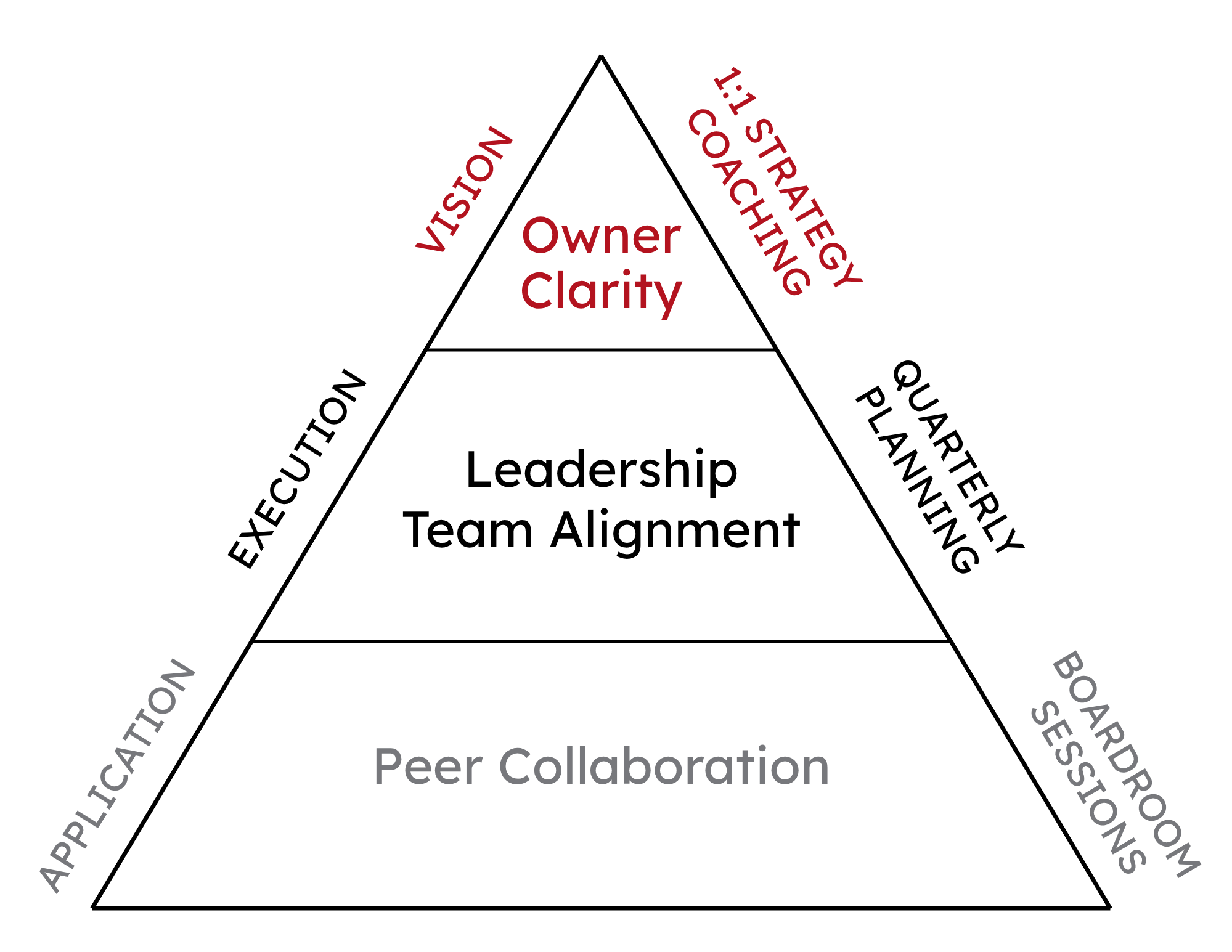
At Get TPA Fit, improving operational efficiency is part of something larger: building Business Fitness — the ability to grow, scale, and perform consistently without dependency on the owner or any one person.
A business becomes stronger when leaders can make decisions, teams understand what they own, and execution doesn’t require constant intervention from the founder. Client experiences reinforce this outcome: leadership teams become more engaged, take greater ownership, and carry initiatives forward with less owner involvement as organizational capability increased.
That’s where operational efficiency, profitability, and long-term business value connect. A company that wastes less capacity can protect more of its margin. A company with stronger leaders can handle more complexity without routing everything through the owner. And a company that can perform consistently without depending on one person becomes more scalable and valuable.
Chaos Destroys Margins
Growth doesn’t automatically create profitability. Without the leadership capacity and operational discipline to support it, growth can amplify the inefficiencies already inside the business. More customers create more complexity, more employees create more opportunities for miscommunication, and more projects create more decisions. If the way the company operates doesn’t improve alongside that growth, costs can rise faster than revenue.
The answer isn’t necessarily working harder, hiring more people, or finding another expense to cut. It’s building a business that executes with greater clarity, accountability, and discipline.
Before looking for another place to cut costs, look for the friction your business is already paying for. That’s where margin may be hiding.
If you’re ready to identify what’s creating unnecessary friction in your business, schedule a Fit Discovery Call.