Most growth stalls are leadership stalls. Learn how weak leadership creates chaos, slows decisions and kills accountability, plus a practical framework to delete chaos, earn more and build value.
By Preston True, Founder & Lead Advisor at Get TPA Fit
Why growth slows when leadership capacity stops scaling
Most owners think growth stalls because of market conditions, sales problems or operational issues.
Here’s the reality.
Business Growth slows because leadership capacity hasn’t kept pace with business complexity.
Revenue can grow 20% while the leadership system stays the same.
That mismatch creates drag.
And drag looks like “we’re busy” with no clean progress.

The myth: Market conditions are the problem
Markets change, competition moves, inputs get expensive.
But strong teams still execute through those conditions.
Weak teams use conditions as cover for internal chaos.
The reality: Complexity outgrows leadership
As you scale, everything multiplies.
More customers with more exceptions
More projects competing for capacity
More hires who need direction
If leaders don’t upgrade how they set priorities, make decisions and drive accountability, the business hits a ceiling.
Not a sales ceiling.
A leadership ceiling.
What you can measure this week
Decisions per week made and documented
Projects shipped on time with clear owners
Meetings that end with owners and due dates
If those numbers are low, your Business Growth Plan is not the problem.
Your leadership operating system is.
The 5 ways weak leadership blocks business growth
Weak leadership isn’t about effort.
It’s about behaviors.
And the behaviors create predictable outcomes.
1) Unclear priorities create the chaos tax
When priorities are vague, everyone makes up their own.
That looks like activity.
It’s actually waste.
Teams restart work after “new direction.”
Managers protect pet projects.
Owners get pulled back into triage.
Clarity beats complexity.
Without clarity, chaos wins.
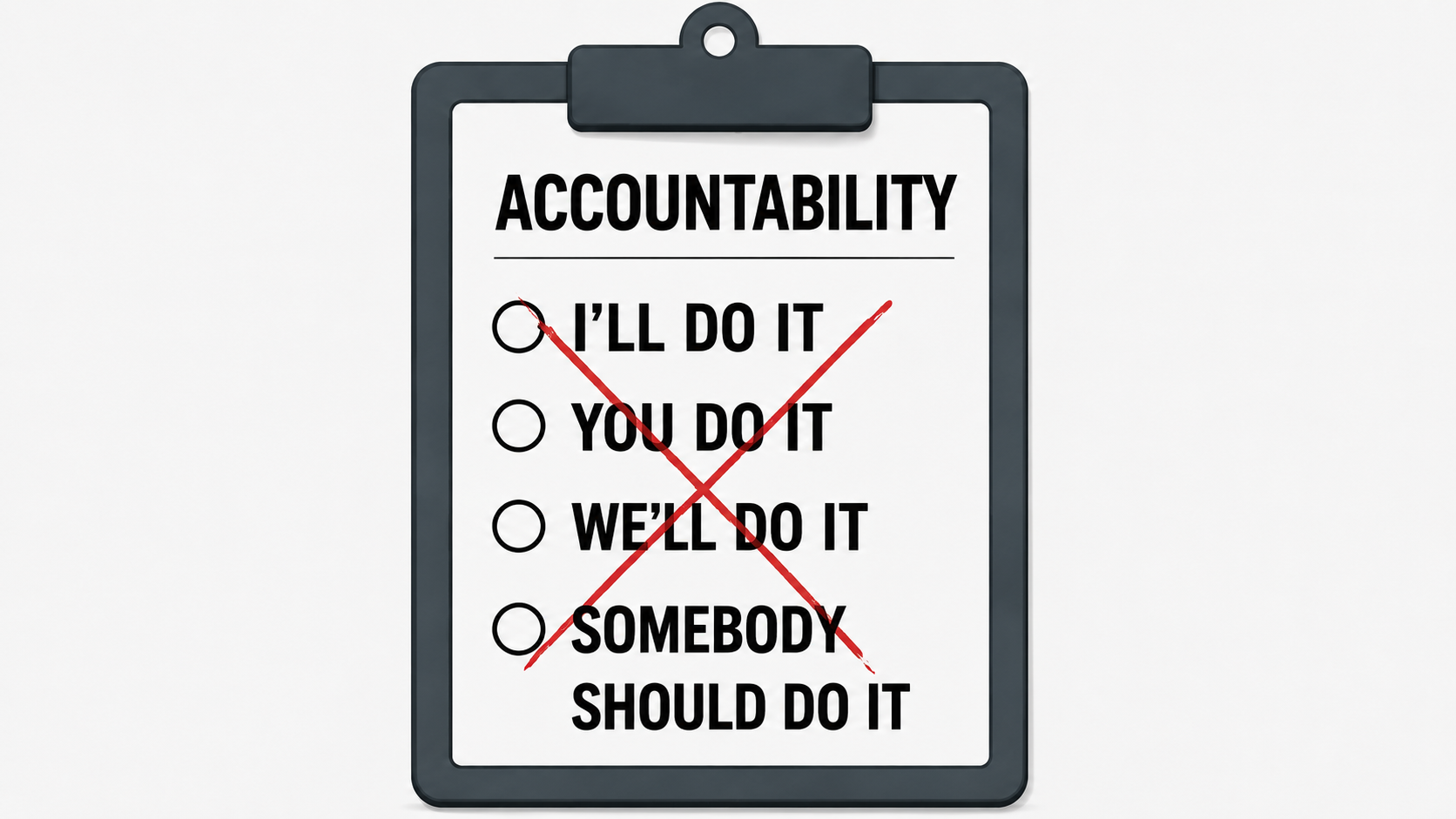
2) Accountability stays optional
Weak leaders avoid clean ownership.
They say, “We all own it.”
That sentence kills execution.
Work has no single accountable owner
Deadlines slip with no consequence
Follow-through becomes a personality trait
Accountability is not a motivational poster.
It’s structure.
3) Decision-making gets slow and political
When leaders can’t decide, the business pays twice.
First in time.
Then in rework.
Meetings become debates without closure
People lobby the owner after the meeting
Teams wait to move until they feel safe
Strong leaders don’t make perfect decisions.
They make decisions with clear inputs and clear owners.
4) Teams get confused and duplicate work
Confusion is expensive.
It shows up as parallel effort, crossed wires and missed handoffs.
Sales promises what Ops cannot deliver
Client work gets repackaged three times
Managers build their own mini-systems
This is how “silos” form.
Not because people are bad.
Because roles and decision rights are unclear.
5) Firefighting becomes the operating system
Firefighting feels productive.
It’s visible.
It’s urgent.
It’s also how businesses stay stuck.
The owner becomes the escalation path
Leaders stop planning and start reacting
Improvement work never gets finished
The result? Simple.
Growth slows because execution slows.

Weak leadership has a predictable cost
Owners usually feel the cost first.
Long days.
Endless context switching.
Revenue that grows without relief.
The business feels heavier, not stronger.
Margin erosion you can’t see in the P&L
Chaos hides in categories you don’t track.
Rework, revisions and scope creep
Idle time while waiting on decisions
Discounts to patch service failures
You can have “good” gross margin and still bleed profit because execution is inconsistent.

Talent drag and an employee mindset problem
Strong people won’t carry weak systems forever.
They either leave or they shrink.
That’s when you get an Employee Mindset.
People do the minimum to avoid blame.
Managers wait for direction instead of owning outcomes.
Initiative drops because decisions take too long (check out this Harvard study on decision making).
This isn’t a motivation issue. It’s a leadership clarity issue.
Owner dependency and stalled enterprise value
If the owner is the decision engine, the business isn’t scalable.
And it’s not transferable.
Buyers and successors pay for systems, not heroics.
Weak leadership keeps value trapped in the owner’s head.

What strong leaders do differently
Strong leaders are not louder.
They’re clearer.
They install a repeatable way to run the business.
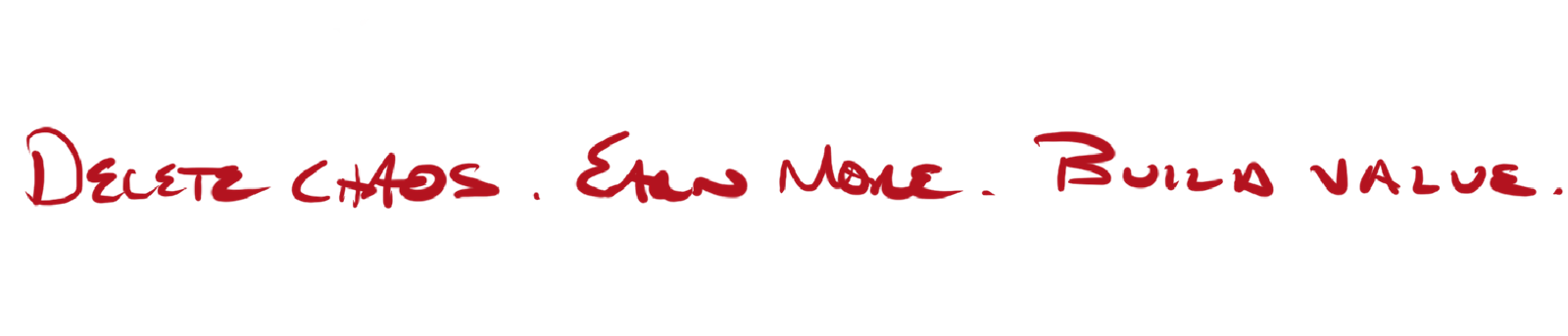
They create clarity in People, Process and Priorities
Every growth stage demands a simple organizing framework.
People: roles are clear and owned
Process: work moves through known steps
Priorities: the quarter has a short list
This is how discipline creates freedom.
They make ownership visible
Strong leaders can answer three questions fast.
Who owns the outcome?
What “done” looks like?
When it is due?
If you can’t name who owns the outcome, you don’t have clarity.
They run meetings that produce decisions
Meetings are a leadership mirror.
Weak leadership creates meetings full of updates.
Strong leadership creates meetings that end with decisions.
Issues get named, not danced around
Decisions get documented, not implied
Owners and due dates leave the room
Leadership development is a business growth strategy
Leadership development isn’t a soft skill initiative.
It’s a business growth strategy because it changes the system that produces results.
Clarity reduces chaos
When leaders set priorities, define roles and decide quickly, the noise drops.
The chaos tax shrinks.
Reduced chaos improves execution
Execution is not effort.
Execution is focus plus follow-through.
When chaos drops, throughput rises.
Projects finish without last-minute heroics
Quality becomes consistent, not occasional
Capacity becomes predictable, not hopeful
Execution drives profit and transferable value
This is the compounding effect owners want.
DELETE CHAOS. EARN MORE. BUILD VALUE.
Those aren’t slogans.
They’re outcomes of a disciplined leadership system.
Use the Business Fitness framework to delete chaos
At Get TPA Fit, we use a simple operating model.
Think of it as strength training for how the business runs. The goal isn’t inspiration.
The goal is repeatable execution.
People: Right Person Right Seat
Right Person Right Seat means two things.
The person fits the values and standard
The seat matches their capability and wiring
When either side is off, leaders compensate with meetings, reminders and micromanagement.
That’s not leadership.
That’s drag.
Start here:
Define outcomes for every leadership seat
Identify the 2 to 3 key numbers each seat owns
Make upgrades decisively and respectfully
Process: Decision rights and operating cadence
Most chaos is a process problem wearing a people costume.
Fix the cadence with weekly leadership meeting with an issues list, monthly execution review with scorecards, and quarterly planning that sets the next 90 days.
Then fix decision rights.
Decide who recommends, who decides and who executes
Set decision deadlines for recurring issues
Document decisions in one visible place
Priorities: A real business growth plan
A Business Growth Plan is not a long document.
It’s a short list the team can execute.
We want 90-day priorities that are owned and measurable.
1-3 priorities for the quarter
One accountable owner per priority
Clear success criteria and due dates
This is how you stop the drift.
A practical checklist to fix leadership drag in 30 days
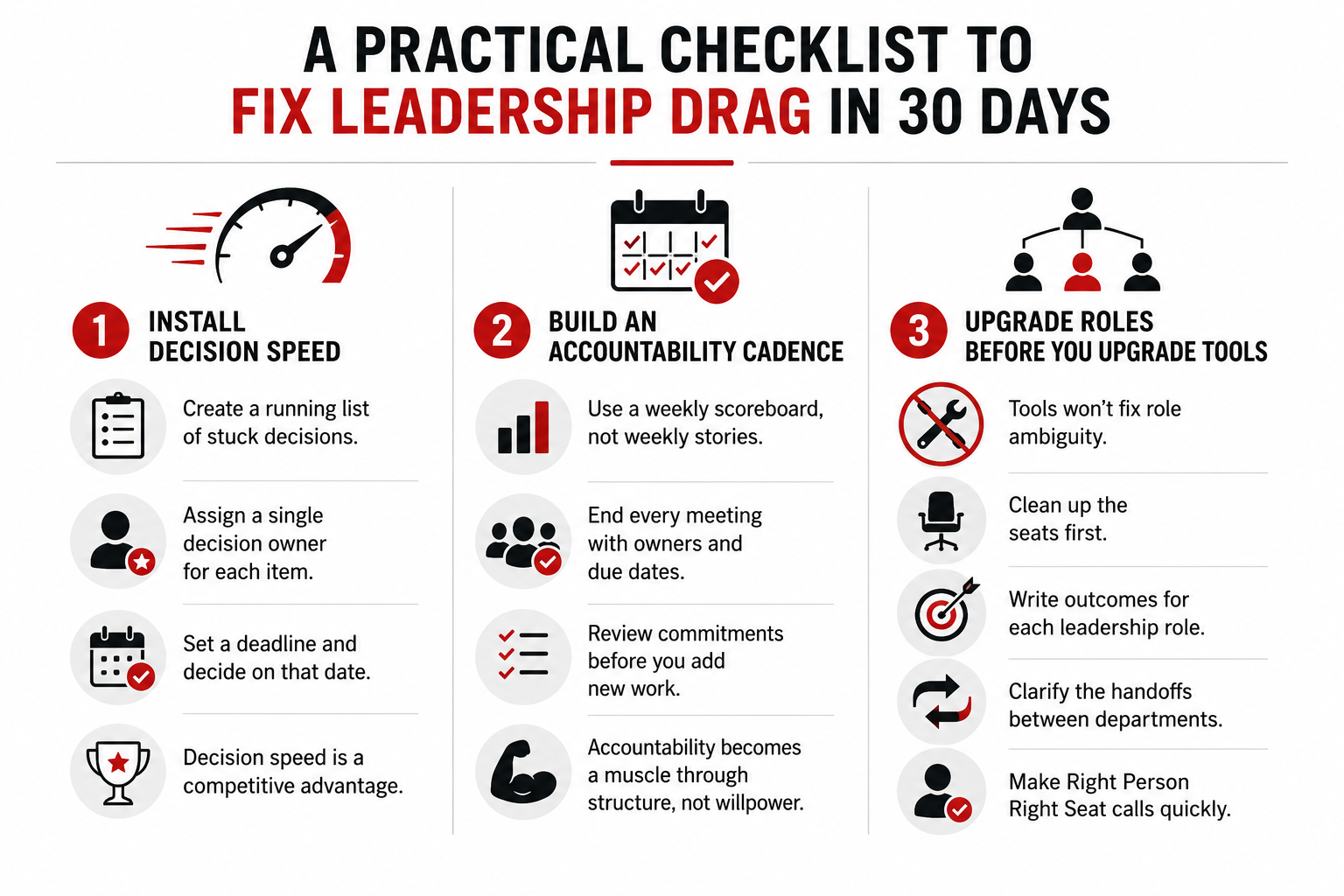
You don’t need a reorg to start. You need decisions and cadence.
Install decision speed
Create a running list of stuck decisions
Assign a single decision owner for each item
Set a deadline and decide on that date
Decision speed is a competitive advantage.
Build an accountability cadence
Use a weekly scoreboard, not weekly stories
End every meeting with owners and due dates
Review commitments before you add new work
Accountability becomes a muscle through structure, not willpower.
Upgrade roles before you upgrade tools
Tools won’t fix role ambiguity.
Clean up the seats first.
Write outcomes for each leadership role
Clarify the handoffs between departments
Make Right Person Right Seat calls quickly

When to bring in a business growth advisor
You can do parts of this internally.
Most owners still benefit from outside facilitation when stakes are high.
Not for motivation, but for speed, clarity, and hard calls.
Signals you need outside facilitation
Your leadership meetings loop the same issues
Quarterly priorities change mid-quarter repeatedly
Key leaders disagree on what matters most
If that’s you, your growth ceiling is leadership.
What a disciplined accelerator should deliver
A real business growth advisor doesn’t hand you a binder.
They install behavior and rhythm.
A simple framework for People, Process and Priorities
Master-level facilitation that keeps it calm and direct
Peer accountability that holds under pressure
That is the Business Fitness Accelerator model:
Master-level Facilitation
Monthly Peer Boardroom Sessions and Fitness Pro Expert Calls
Quarterly Planning Accelerators
Monthly 1:1 Private Strategy Sessions
The 60-day mutual-fit standard
Clarity goes both ways. If it’s not a fit, you should know fast.
That’s why we run a 60-day mutual-fit checkpoint.
It reduces risk and forces honesty. If you want scale, this removes the ceiling.
Start with the Owner Dependency Checklist to see where weak leadership behaviors are creating drag.
Ready to take the next step in building a scalable, valuable (and ultimately, sellable) business?
Our Business Fitness Accelerator program might be a right fit for you.
BOOK A FIT DISCOVERY CALL BELOW